
If you are into compatibility astrology, the Spouse Planet is one placement you really do not want to ignore. In Vedic astrology, this planet is called the Darakaraka, and it offers a surprisingly direct clue about the kind of partner who fits you for the long run.
A lot of people begin with synastry, composite charts, Moon signs, Venus signs, Mars chemistry, and all the rest. Those tools absolutely matter. But the beauty of the Spouse Planet technique is that it begins with your own chart. Instead of only asking who looks compatible on paper, it asks a deeper question: what kind of partner is actually suited to you?
That is what makes the Spouse Planet so useful. It is not only about attraction. It points to the qualities you need in a serious partner, the role that person may play in your life, and even the kinds of relationship experiences that help you grow.
Table of Contents
- What the Spouse Planet actually means
- How to find your Spouse Planet in seconds
- How to interpret your Spouse Planet properly
- The Spouse Planet meanings for all seven visible planets
- What your Spouse Planet is really helping you see
- A simple way to use this in real life
- Final thoughts on the Spouse Planet
What the Spouse Planet actually means
The Darakaraka is the planetary significator of spouse or partner. In simple terms, your Spouse Planet describes the core energy your long-term partner is likely to carry.
And this goes beyond surface-level traits. The Spouse Planet can show:
- The main qualities of your ideal partner
- The role that partner may play in your life
- The types of experiences the relationship may bring for your personal evolution
In other words, this is not just about who they are. It is also about who they help you become.

How to find your Spouse Planet in seconds
This is one of the simplest astrology techniques to use.
You can actually find out your Atmakaraka and Darakaraka planets directly upon generating your free birth chart from my astrology calculator: https://thewhyof.you/free-chart But you can also do this manually:
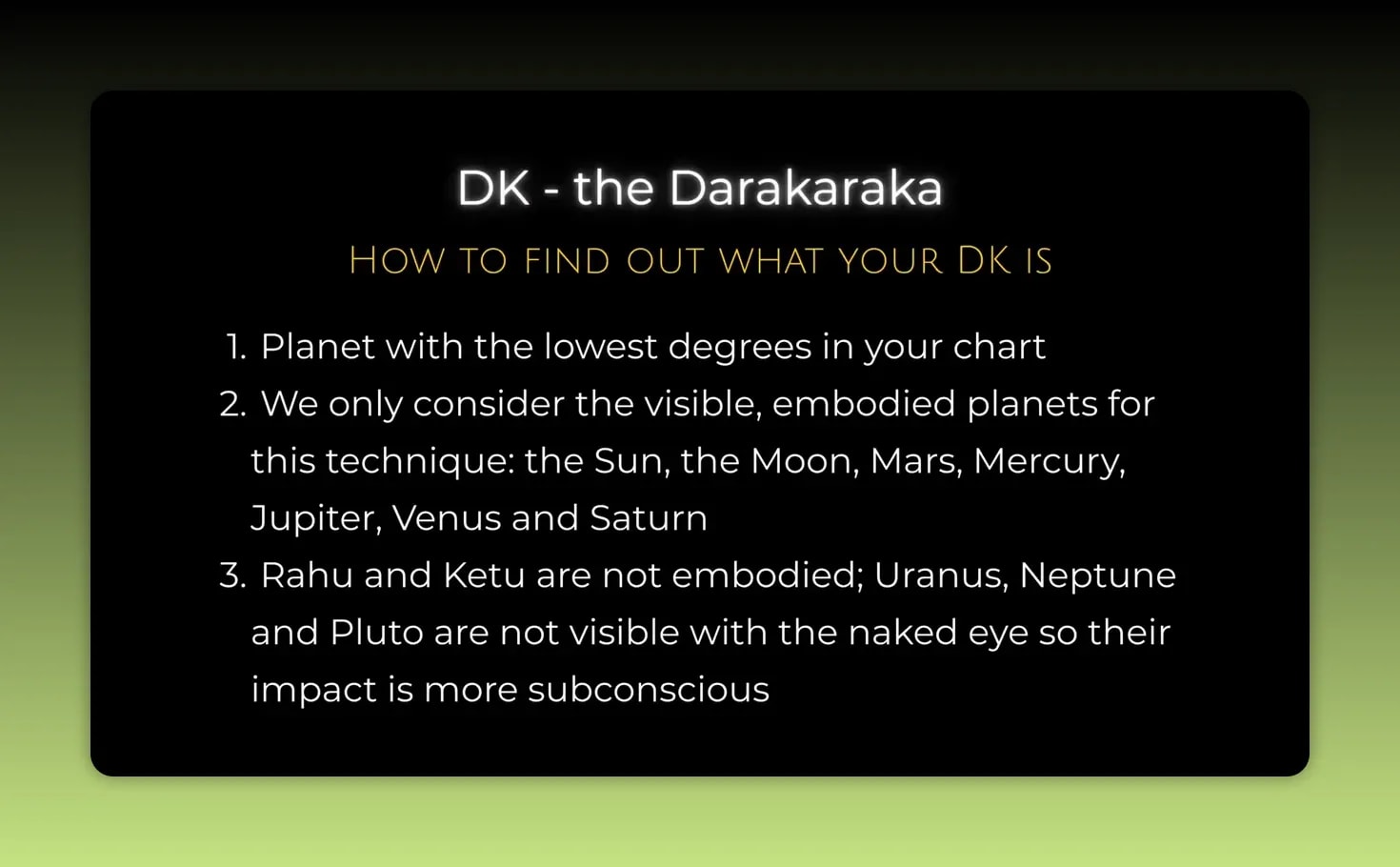
- Open your natal chart.
- Look at the degrees of the visible planets.
- Find the planet with the lowest degree, meaning the one closest to zero.
For this technique, only use the seven visible planets:
- Sun
- Moon
- Mars
- Mercury
- Jupiter
- Venus
- Saturn
Do not include Rahu, Ketu, or the outer planets here. The logic behind this method is that the Spouse Planet is read through the embodied, visible planets.
How to interpret your Spouse Planet properly
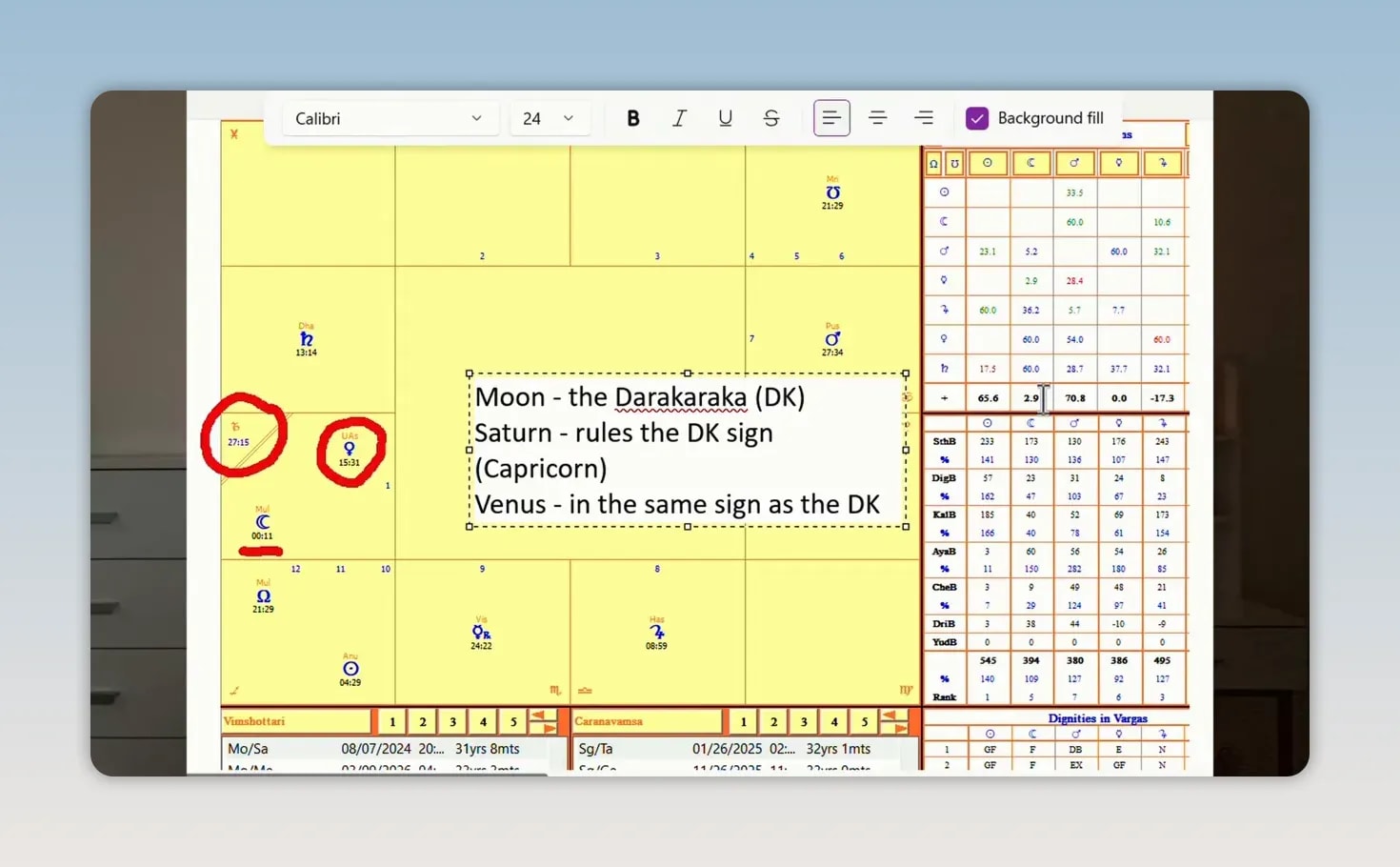
The first and most important step is to understand the nature of the planet itself. If your Spouse Planet is Venus, start with Venusian qualities. If it is Saturn, start with Saturnian ones, and so on.
But the interpretation gets more layered when you add two supporting clues:
- The ruler of the sign your Darakaraka is placed in
- Any planets in the same sign as your Darakaraka
So if the Moon is your Spouse Planet, but it sits in Capricorn with Venus, you would blend Moon qualities with Saturn, the ruler of Capricorn, plus Venus because it shares the sign.
That creates a more textured picture. Instead of one-note emotional softness, you could get emotional warmth blended with realism, discipline, beauty, tact, and charm.
The Spouse Planet meanings for all seven visible planets
These are the core qualities that tend to matter in a long-term partner when a certain planet becomes your Spouse Planet. Someone may be attractive, exciting, or compelling for a season, but if they do not express the deeper needs shown by your Spouse Planet, the connection may not feel fulfilling over time.
If your Spouse Planet is the Sun
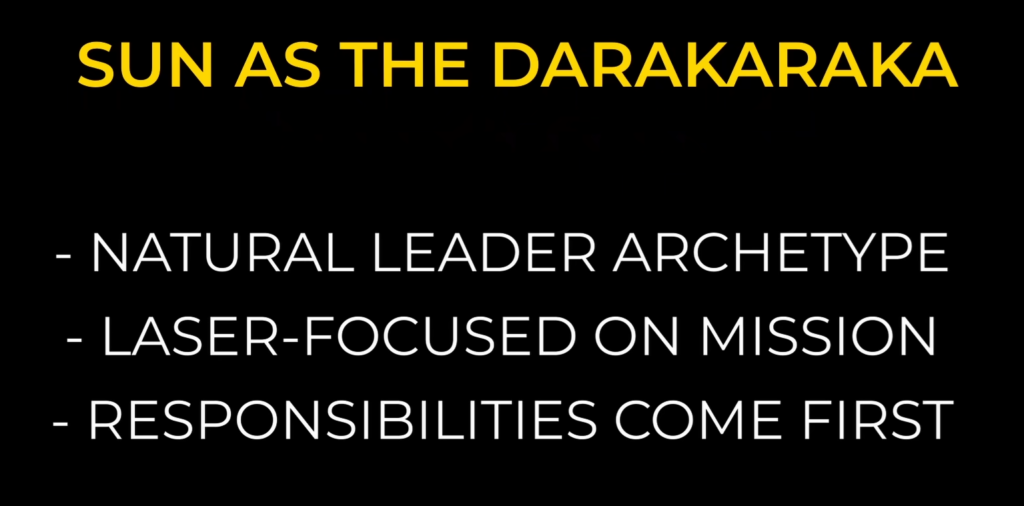
A Sun Darakaraka points toward a partner with presence. This is someone who tends to stand out, carry natural authority, and project confidence without needing to force it.
Common Sun Spouse Planet themes include:
- A strong sense of identity and individuality
- Leadership qualities and a clear personal mission
- Reliability and consistency over time
- A protective, guardian-like streak
- Direct communication and a strong need for respect
This kind of partner is often devoted to their path, career, or legacy. They can be someone to admire, someone with backbone, and someone who takes responsibility seriously.
The challenge? A Sun Spouse Planet can also attract a partner who leans bossy, struggles with compromise, or places ambition ahead of relationship needs. They may love giving advice and be much less enthusiastic about receiving it.
If your Spouse Planet is the Moon
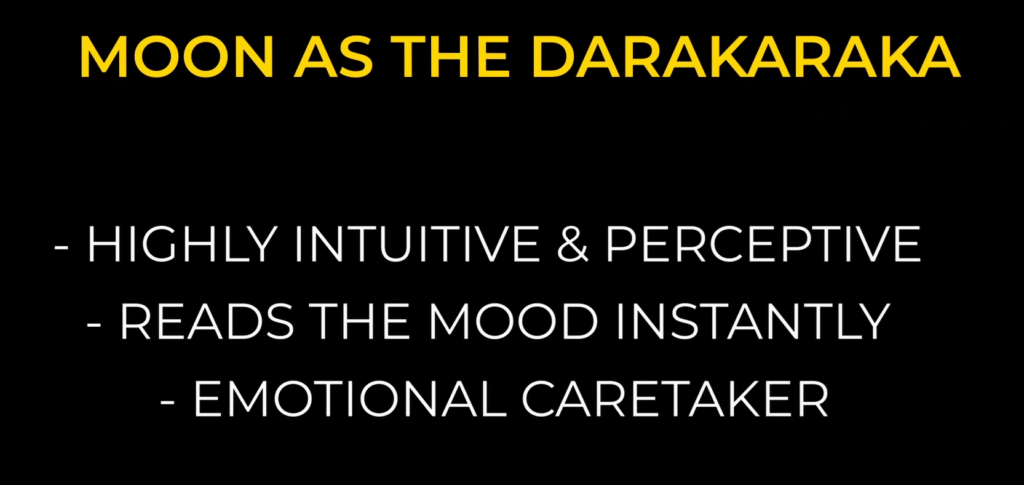
A Moon Spouse Planet points to someone nurturing, emotionally intelligent, and deeply sensitive to atmosphere. This is the partner who feels like home.
Typical Moon qualities include:
- Emotional warmth and safety
- Nurturing care toward loved ones
- Adaptability and flexibility
- Conflict avoidance and peacemaking
- Strong intuition and mood awareness
This partner often comforts through softness, kindness, and practical care. They may literally feed people, fuss over the people they love, and create a sense of emotional shelter.
The shadow side of the Moon Spouse Planet is that such a partner may also need a lot of reassurance. Moodiness, oversensitivity, dependence, or silently hurt feelings can become part of the relationship dynamic if emotional reciprocity is missing.
If your Spouse Planet is Mars
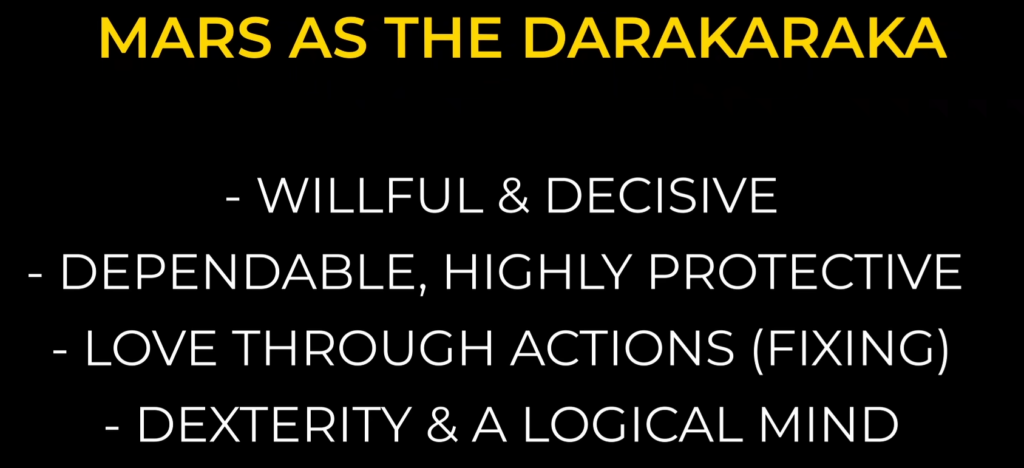
Mars as the Spouse Planet usually points toward a partner who is decisive, practical, fiery, and action-oriented. This is the classic problem-solver.
You may be drawn to someone who:
- Acts quickly and efficiently
- Dislikes wasted time and incompetence
- Shows love through fixing, building, and doing
- Protects fiercely
- Speaks bluntly and values honesty over polish
There is often a strong sense of right and wrong here. Mars partners can be courageous, principled, and highly capable under pressure. They may also have mechanical, technical, or hands-on skill.
But Mars as a Spouse Planet can come with impatience, sharp delivery, and occasional explosive reactions. Their fire is not necessarily personal, but it can still feel intense.
If your Spouse Planet is Mercury

If Mercury is your Spouse Planet, mental connection becomes essential. You need someone curious, witty, flexible, and genuinely interesting to talk to.
Mercury partner signatures often include:
- Strong communication skills
- Humor, playfulness, and ease
- Many interests, hobbies, or talents
- Adaptability and open-mindedness
- A need for freedom, variety, and movement
This is the partner who can talk for hours, explore every side of an idea, and keep life mentally alive. They often learn fast and dislike rigid routines or dogmatic thinking.
The downside of a Mercury Spouse Planet is inconsistency. This kind of partner may seem noncommittal, hard to pin down, or emotionally detached. If stability is your top priority, their constant motion can feel fickle.
If your Spouse Planet is Jupiter

Jupiter as the Spouse Planet suggests a partner who is generous, wise, uplifting, and grounded in meaning. This is often the mentor or guide archetype.
Jupiterian qualities include:
- Kindness, forgiveness, and perspective
- Faith and optimism
- Natural wisdom and good advice
- Fairness and openness to other viewpoints
- A calming and accepting presence
These partners often help others grow. They can be deeply reassuring, emotionally spacious, and genuinely interested in what is true or meaningful rather than merely convenient.
The shadow side of a Jupiter Spouse Planet is that everyday practicalities can get neglected. Budgeting, discipline, urgency, and grounded follow-through may not be their strongest gifts. At times they may come across as preachy if they feel their perspective is not appreciated.
If your Spouse Planet is Venus

Venus as the Spouse Planet points to someone charming, refined, pleasant, and relationship-oriented. This partner tends to value beauty, harmony, and shared enjoyment.
Venus partner traits often include:
- Likability, tact, and good social instinct
- Love of beauty, aesthetics, and comfort
- Diplomacy and fairness
- Emotional insight and relational intelligence
- A preference for quality over crude urgency
This is often someone who knows how to make life feel sweeter. They may be skilled at hosting, connecting, smoothing conflict, and creating warmth through affection and mutual pleasure.
The challenge with a Venus Spouse Planet is that harmony can become over-prioritized. That may look like people-pleasing, inauthentic niceness, or too much focus on comfort, image, and material polish.
If your Spouse Planet is Saturn

Saturn as the Spouse Planet points toward seriousness, endurance, realism, and commitment. This is one of the clearest signatures for a partner built for the long haul.
Saturnian partner themes include:
- Discipline, resilience, and work ethic
- A pragmatic, no-nonsense worldview
- Honest and blunt communication
- Loyalty and long-term thinking
- Calmness in crisis
This partner may be understated rather than flashy, but deeply dependable. They often prefer reality over fantasy, quiet authenticity over social performance, and substance over charm.
Saturn as a Spouse Planet can also bring lessons. The relationship may feel more about loyalty, responsibility, stability, and endurance than sweeping romance. At times, the partner may seem heavy, pessimistic, or demanding of maturity. But they are often the one who stays.
What your Spouse Planet is really helping you see
The Darakaraka is not just a dating trick. The Spouse Planet shows what kind of energy your deeper self recognizes as meaningful in partnership.
It can help explain why some people are exciting but unsustainable, while others feel substantial enough to build a life with. It can also help you notice what you repeatedly need from committed love, beyond chemistry alone.
That is why this technique is so powerful. The Spouse Planet does not replace full compatibility analysis, but it gives you a fast and surprisingly revealing foundation.
A simple way to use this in real life
Once you know your Spouse Planet, ask yourself:
- What qualities from this planet consistently matter to me in serious relationships?
- Which short-term attractions lacked those qualities?
- What role do I expect a true partner to play in my life?
- What growth themes tend to come through my relationships?
If you want to go further, combine your Spouse Planet with sign rulership, conjunctions, and other relationship indicators in the chart. That is where the reading becomes much more specific.
For more chart tools and free astrology downloads, you can also browse the Why of You free guides.
Final thoughts on the Spouse Planet
The Spouse Planet is one of the cleanest entry points into relationship astrology because it is simple, personal, and deeply revealing. It helps distinguish passing chemistry from the kind of partner energy that actually nourishes your long-term life.
If you have never checked your Darakaraka before, this is the perfect place to start. Find your lowest-degree visible planet, read its qualities carefully, and notice how accurately your Spouse Planet describes the people who feel like true relationship material.